


TOP STORY: SALARY SACRIFICE TO BE… SACRIFIED
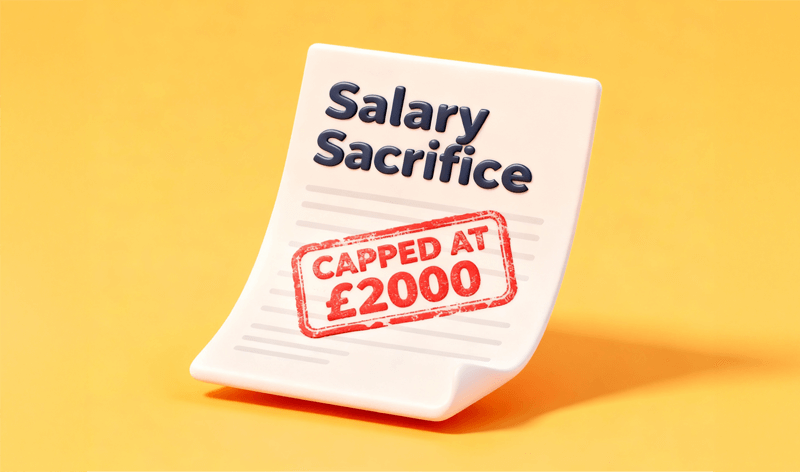
The government is reportedly now considering capping the amount you can pay into a pension via salary sacrifice without paying National Insurance to £2,000 per year in its upcoming Autumn Budget.
Salary sacrifice, you say? What on earth is that?
Good question. It’s less complicated than it sounds. Let’s think of it as a ‘swap’.
Imagine your total salary is a pile of money before the government takes its share in taxes.
With salary sacrifice, you basically agree with your employer to swap £100 of cash it would pay you for something you need instead, like a bigger pension payment.
Why would you do that?
Well, the £100 is swapped before your salary is taxed. That means you pay less income tax and national insurance, and you get to keep the full £100 value elsewhere (in your pension, for example).
There’s a benefit for your boss, too, as because your actual salary is lower, they pay lower employer National Insurance Contributions.
So, it’s a win-win for everyone… except the government, which gets less tax as a result. The chancellor, Rachel Reeves, is currently looking to fill in a big old “black hole” in the public finances.
So, she’s thinking of capping the amount you can pay into your pension through these schemes per year in the hopes of clawing back a bit more tax.
What does that mean for me?
If you currently sacrifice less than £2,000 of your salary into your pension through a salary sacrifice scheme, this won’t affect you.
For example, if you earned £40,000 a year, you’d need to sacrifice around 5% of your salary through a scheme to breach the £2,000 threshold.
Workers putting away any more than this will need to pay standard National Insurance rates: 8%, if they earn less than £50,000, and 2% on anything above that.
A person earning more than £125,000 who sacrificed 20% of their salary could pay £460 more, while their employer could pay £3,450 more, according to tax advice firm RSM.
HOWEVER… TAX-FREE CASH TO REMAIN UNTOUCHED. BUT WHAT IF IT’S TOO LATE?

This week, the government has confirmed it has no plans to change the tax-free lump sum allowance in its upcoming Autumn Budget.
That will induce a huge sigh of relief for many Brits – but for thousands, they have already reacted to the speculation and it’s too little too late.
What’s wrong with taking your tax-free cash out?
Nothing! If you’re planning on spending it, that is.
The problem with taking your tax-free cash out is that once it’s out of your pension, it stops growing in a tax-free environment (you’ll pay tax on interest or investment returns), and you have significantly dented your pension pot. That means lower growth in future.
The tax implications of putting money in in future, or any future withdrawals, may also change.
If you have taken out any more than your 25% tax-free lump sum, you will only be able to put £10,000 back into your pension per year (down from £60,000) while benefitting from pensions tax relief.
That’s because of the ‘Money Purchase Annual Allowance’, which caps future contributions for anyone who is drawing on their pension to £10k.
If you have only taken your tax-free cash, you may be able to put more than this back in, but beware of falling foul of HMRC’s pension recycling rules (where you take cash out your pension then put it back to generate double tax relief).
You’d need to be able to demonstrate you weren’t trying to ‘double dip’ on pensions tax relief, which may be hard to prove.
Also, be aware that putting the cash back will not mean that you can take it back out again tax-free. Any future withdrawals will be taxed at your marginal rate of income tax.
So, what should I do now?
Because of the various tax implications, it may be a good idea to focus on spending your tax-free cash before taking any more money out of your pension.
In the meantime, put as much of the cash as possible into an ISA so that the returns or interest are tax-free.
For the remaining savings, make sure you’re getting the best interest rate possible or, if you don’t need the money imminently, consider investing it. The stock market has historically outperformed money held in cash long-term.
For those approaching retirement, consider lower-risk investments. Some stocks and shares ISAs or investment platforms will have lower-risk portfolios tailored for people nearing retirement.
TIP OF THE WEEK: BOOST YOUR STATE PENSION WITH CHILDCARE CREDITS

If you are, or have, a grandparent who has helped with childcare, they may be able to boost their state pension with so-called Specified Adult Childcare Credits.
These are National Insurance credits which contribute towards your National Insurance record, which is what determines your state pension payments.
The person applying needs to have cared for a child under 12 while the child’s main carer (a parent or guardian) was working.
To claim, both the grandparent and the parent must complete and sign a form, and credits may be able to be backdated.
Apply here.
THIS WEEK ON THE INVESTING INSIDERS PODCAST: THE £65K MOTHERHOOD PENALTY

In this week’s episode of the Investing Insiders Podcast, personal finance expert Sarah Coles joins us to discuss the shocking financial penalty setting mothers back over £65,000.
We discuss:
- The true cost of starting a family
- How to navigate earnings loss after having children
- How to financially plan for parenthood
- Strategies to combat the motherhood penalty
- Financial support available for mothers and carers
Email your financial questions to us at podcast@investinginsiders.co.uk and we might answer it in a future episode!
DEAL OF THE WEEK: WIN £5,000 FOR SHARING WHAT MONEY MEANS TO YOU
Moneybox is currently running a competition where you could win up to £5,000 for creatively sharing what money means to you.
You need to enter by 18 November for a chance to win the £5k. You can enter whatever you like – a photo, video, voice note, poem, painting, or a personal essay.
Customers will then vote for the winner from a shortlist of 20 top entries.
Jargon Buster

- Tax relief: Where money you would have paid in income tax is added to your pension instead.
- Budget: An event where the chancellor announces upcoming tax and spending changes by the government.
- ISA: A savings or investment account where any interest or returns are tax-free.
- National Insurance: A kind of income tax you pay on your salary. National Insurance contributions count towards your State Pension record.
Read our past editions…

Your Questions Answered
We’re keen to answer any and all of your burning finance questions – drop us a message to hello@investinginsiders.co.uk and we may feature your query with our response in our next newsletter.
We want your feedback! Get in touch with what you like and what you want to see in future
 Tiktok
 LinkedIn
 Website
Share on


